Walk down a MiniSBK grid and you are mostly looking at GP-2s. It is the bike the Canadian classes are built around, and if you are budgeting a season here, it is almost certainly the one you are budgeting for. It is also the bike Cohen races, in the 190 configuration — see our wrenching post for what living with one actually looks like on a Wednesday night.
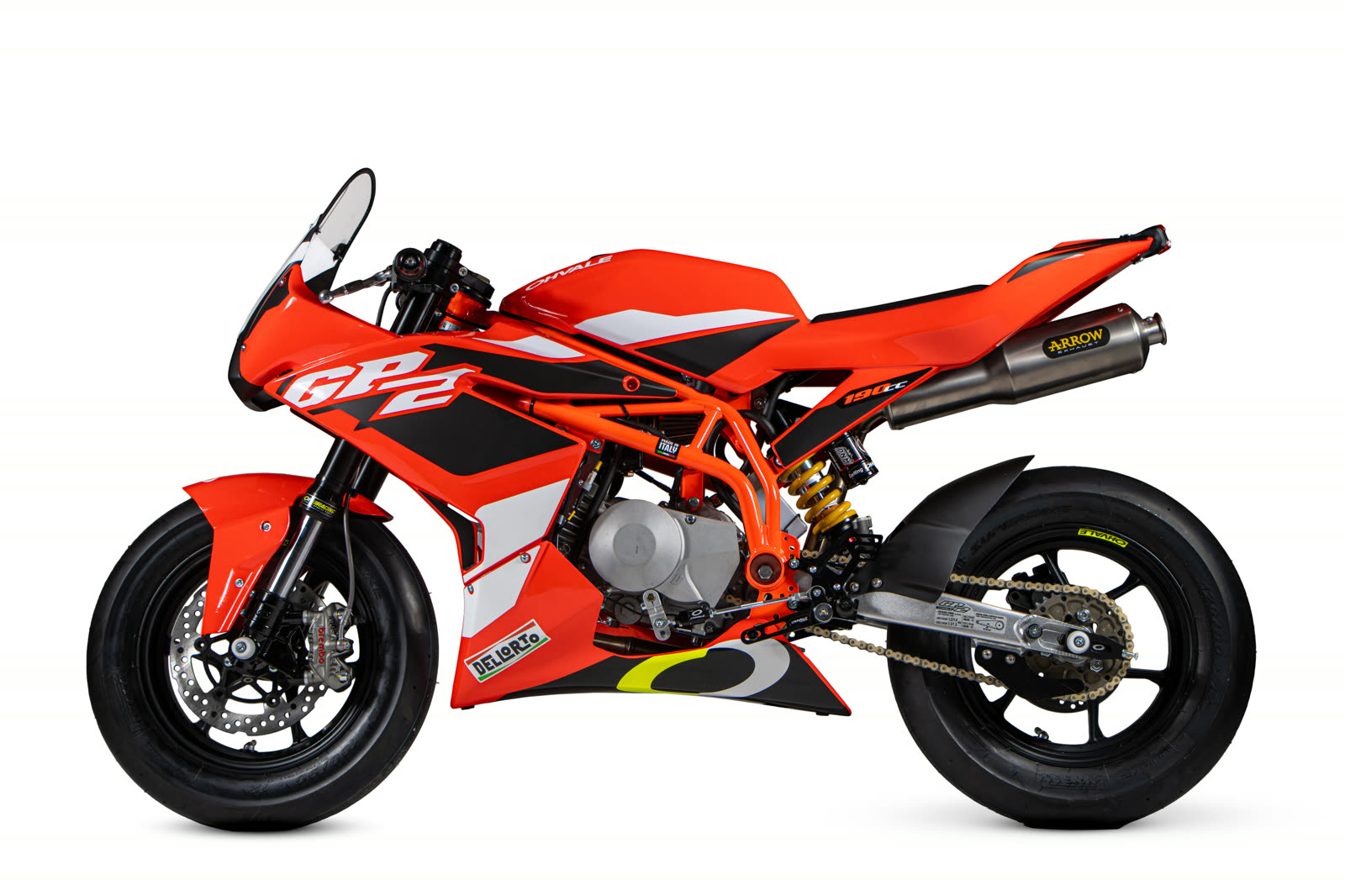
What makes it the standard bike
Twelve-inch wheels, a proper Brembo front end, and geometry that scales up cleanly from the GP-0 without jumping all the way to full-size dimensions. The 190 configuration is the one that dominates the Canadian grids we race, and it sits at the top of the mini ladder here — the step a rider takes once the smaller classes stop being enough bike.
Why “the one everybody is on” is not a small thing
A class built around one common platform is good for racing and good for families. Parts interchange between grid-mates, mechanics who know one GP-2 mostly know them all, and the used market stays healthy because the next family is always looking for exactly this bike. None of that is true of a fragmented class where every rider is on something different.
It also means the racing itself is closer to a level playing field. When most of the field is on the same chassis with the same wheel size and similar power, the result comes down to the rider, not who bought the biggest bike. That is worth more to a parent than any spec sheet line.
What it actually costs to run
We are not going to pretend the GP-2 is cheap — a season of tires, fuel, entry fees and the inevitable crash repair adds up fast, the same way it does for any real racing motorcycle. What we will say is that it is a known, predictable cost, because so many families are running the identical bike that the community has already worked out what a season actually takes. Ask around the paddock before you buy; someone next to you is running the same numbers.